Lisbon from Santa Luzia
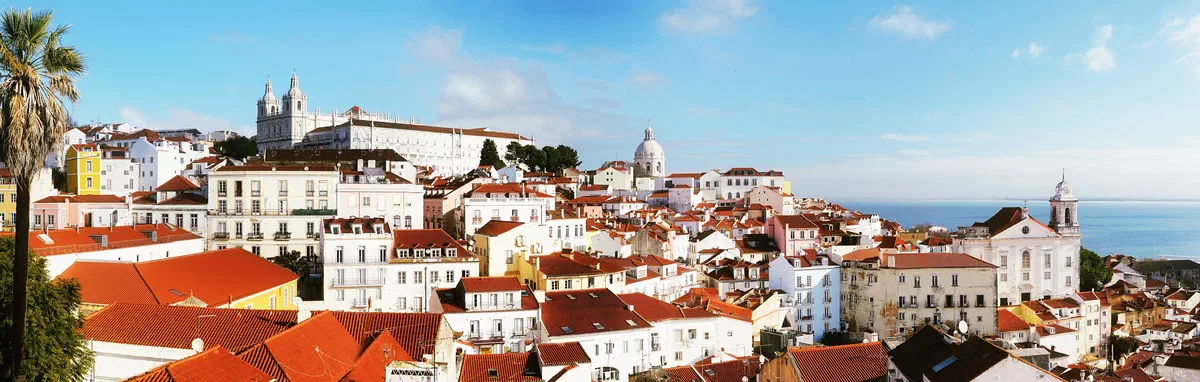
A January midday in Lisbon, from the tiled terrace of the Miradouro de Santa Luzia out over Alfama to the river.
- Year
- 2025
- Media
- Photography
- Where
- Lisbon, Portugal
Lisbon
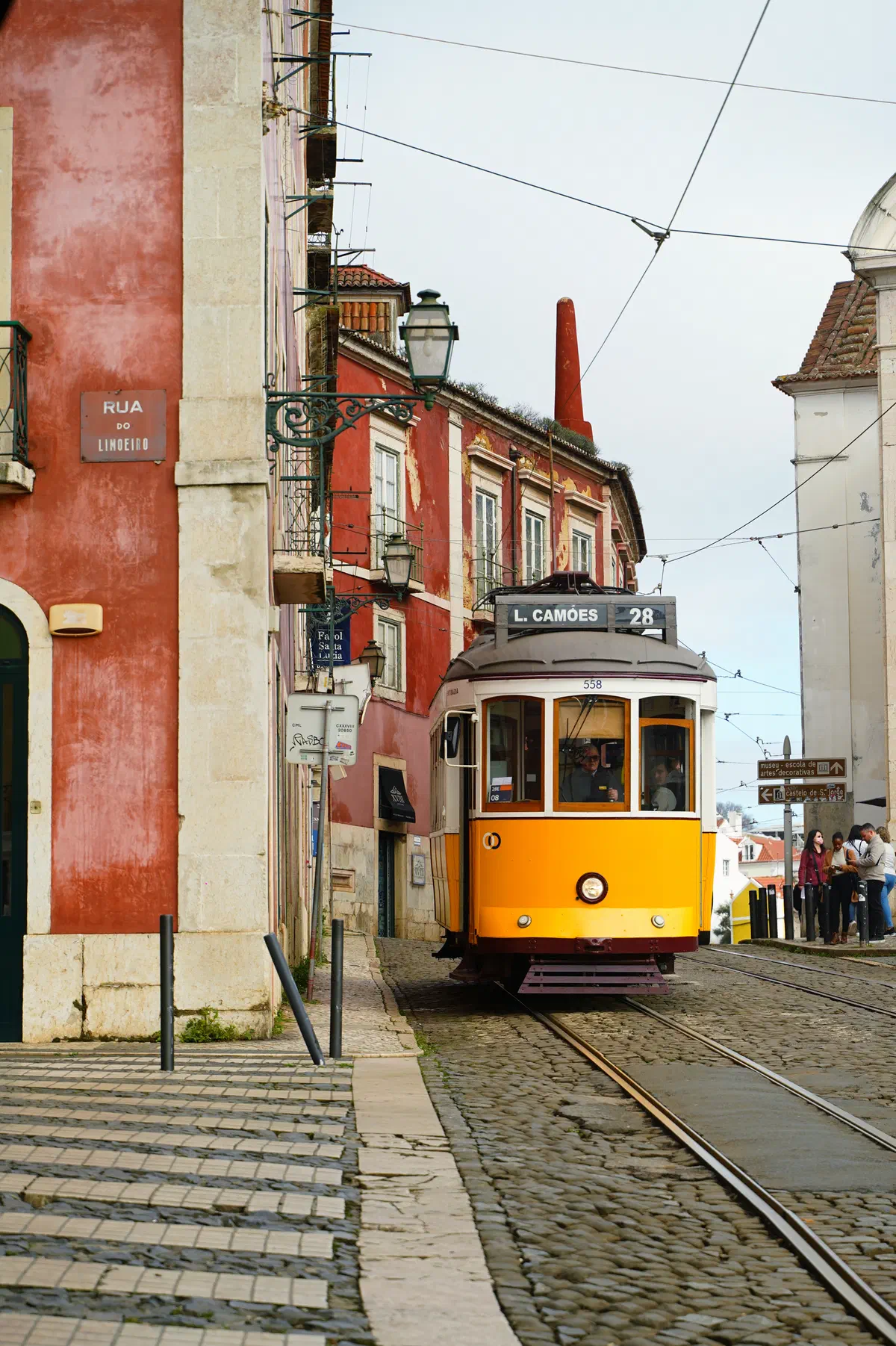
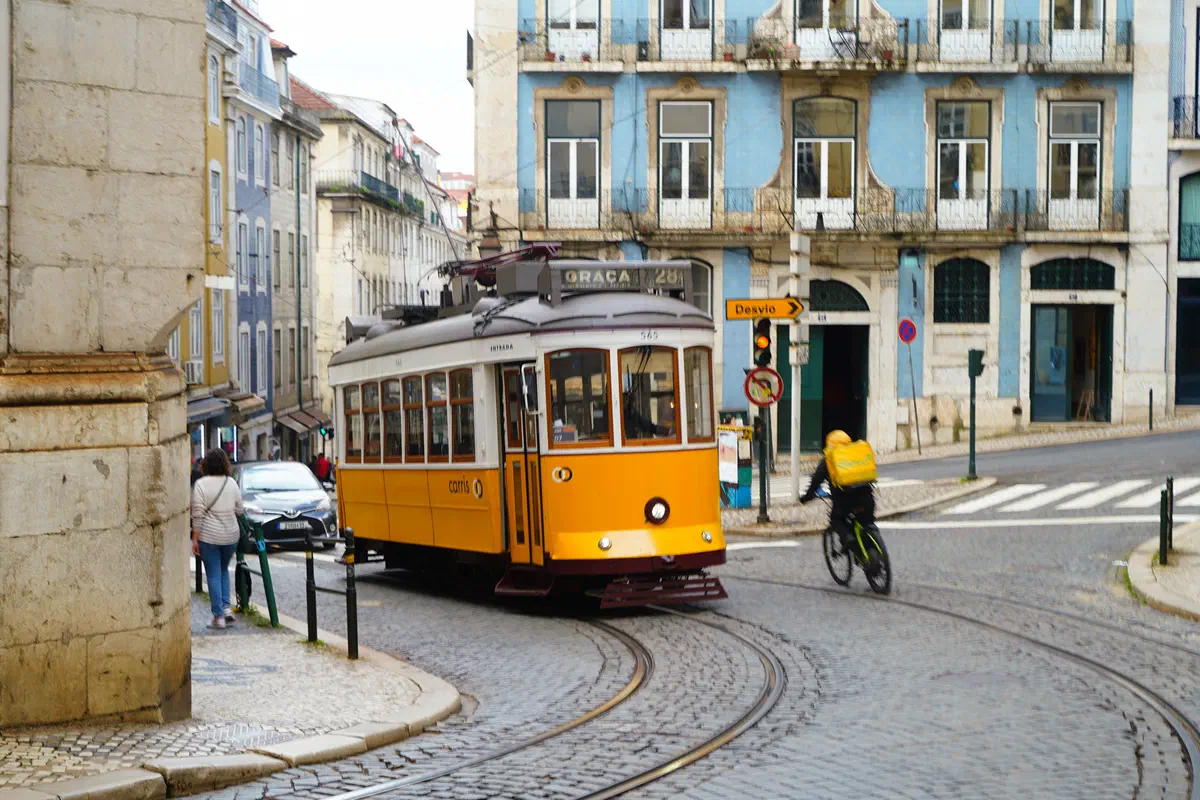
Lisbon is built on seven hills above the widest stretch of the Tagus, and most of it was rebuilt in a hurry. The earthquake of 1 November 1755, and the fire and the wave that followed it, took the lower city down to the river; the Marquis of Pombal put it back up on a grid of straight streets and plain façades. Alfama, on the slope under the castle, sits on harder rock and came through mostly standing, which is why it still reads the way it does: stairs instead of streets, laundry across the lanes, and the tram squeezing past front doors.
Miradouro de Santa Luzia
Halfway up that slope, on the tram 28 line, the Miradouro de Santa Luzia is a small terrace beside the church of the same name. A pergola runs along its edge with bougainvillea over the trellis, and the walls are faced in blue and white azulejos, among them a panel of the Praça do Comércio as it stood before the earthquake. Below it, Alfama falls away in terracotta roofs to the white dome of the Panteão Nacional, the towers of São Vicente de Fora, and the river opening out towards the sea.
The panorama is the whole sweep from the terrace wall, from the rooftops at its feet to the far bank. Shot around midday on 23 January, when the winter sun sits low enough over the Tagus to turn the water to glare.
Shot on

- Sony A7 III
- Tamron 28-75mm f/2.8 Di III RXD
Location
- Miradouro de Santa Luzia, Lisbon, Portugal